IP Check GuidesFeatured
IP Reputation Check: Risk Scores, Blocklists and Proxy Tags
Learn what IP risk scores, blocklist entries and proxy labels actually mean, which evidence to compare, and why no reported risk does not prove safety.
13 min read
Practical guides, technical insights and updates from CHA.LA.
Learn what IP risk scores, blocklist entries and proxy labels actually mean, which evidence to compare, and why no reported risk does not prove safety.
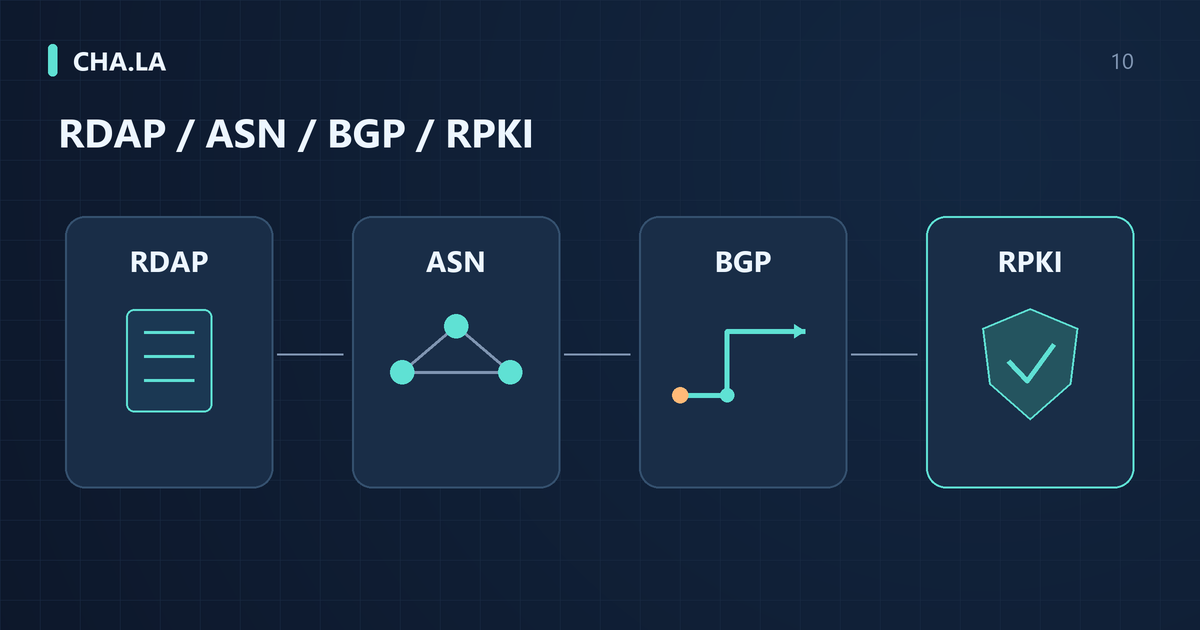
Understand IP registration, autonomous systems, BGP routes and RPKI origin validation. Learn why registry countries and Anycast do not reveal a user’s location.
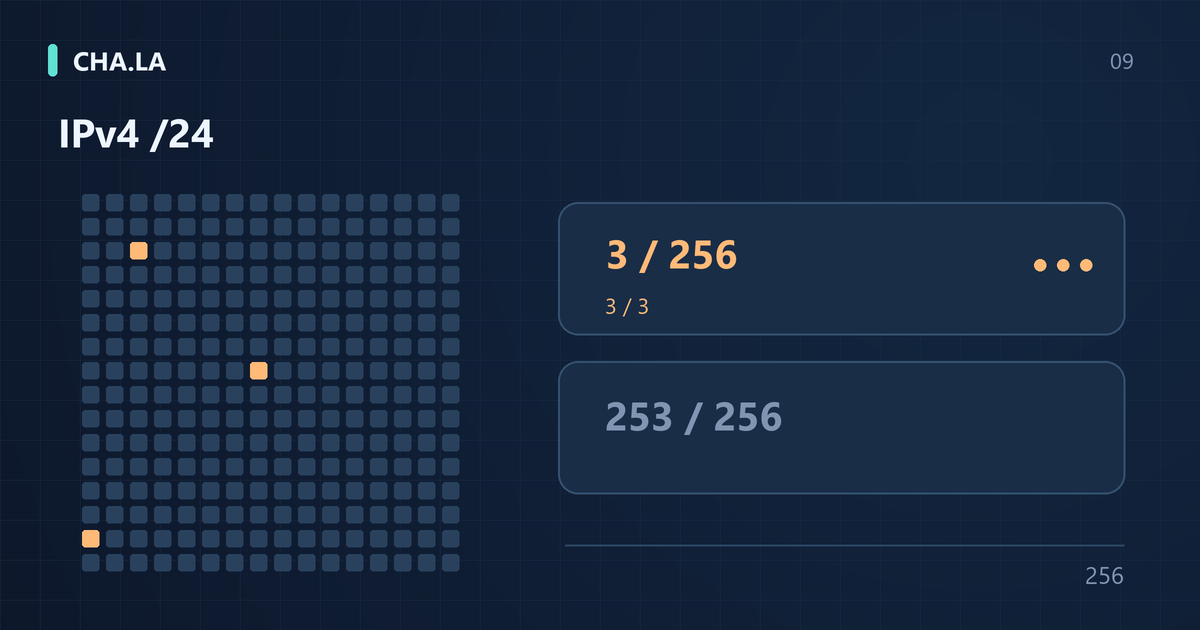
Use a 256-address example to distinguish sample risk rates from subnet coverage. Learn why a few flagged IPs cannot establish the reputation of a whole /24.
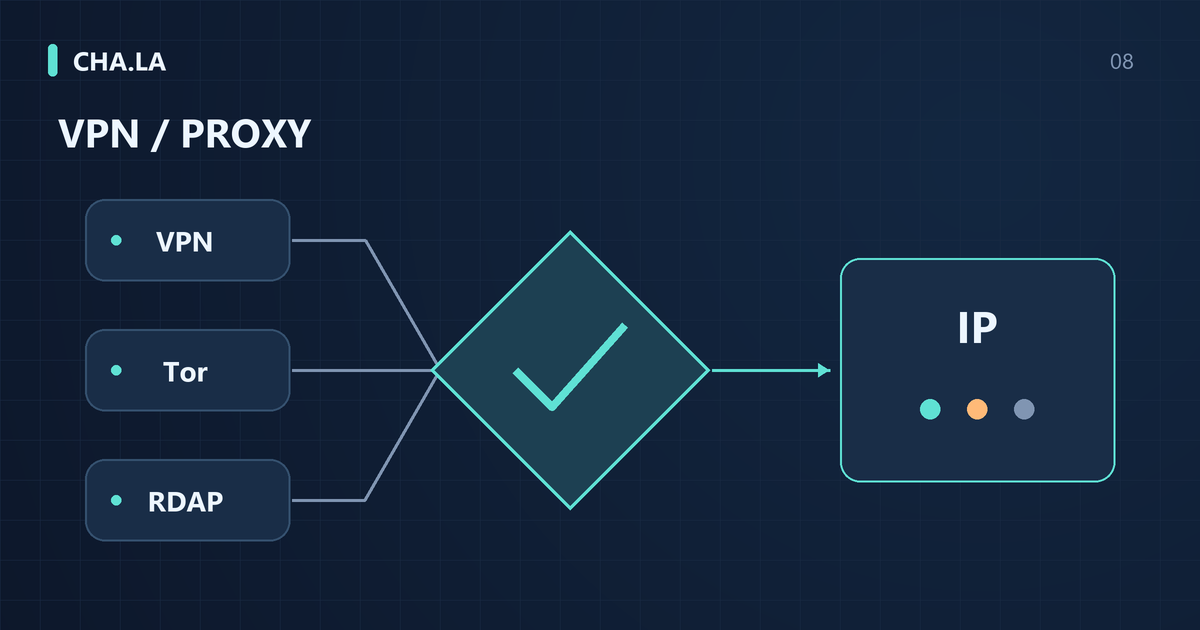
Understand VPN, proxy, Tor and hosting labels. Check shared exits and outdated records, then gather evidence for the website or data provider to review.
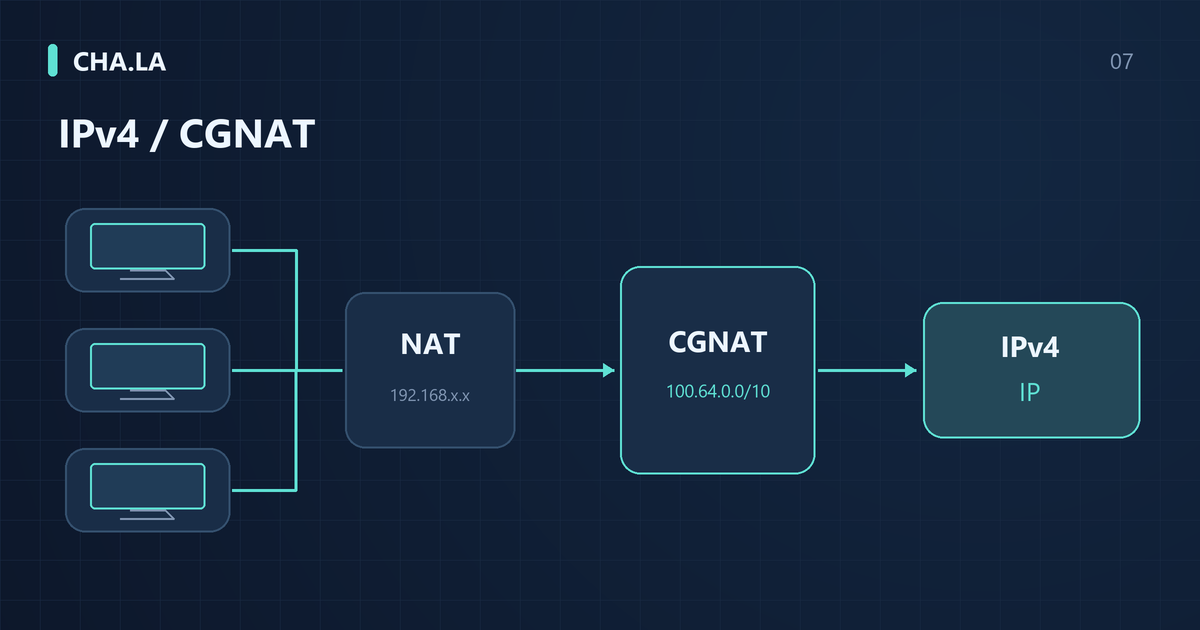
Compare your router WAN address with your public IPv4 and IPv6. Learn the clues for CGNAT, what port forwarding can do and what to confirm with your ISP.
Troubleshoot failed website connectivity checks across DNS, TLS and HTTP. Understand CORS, status 403 and timeouts before concluding that your IP is blocked.
Check WebRTC, DNS and IPv6 paths before and after connecting to a VPN. Distinguish private addresses and resolver data from evidence of an actual leak.
Compare residential, ISP-hosted and datacenter IP labels. Learn why ISP ownership, a static address or matching country data does not prove a home connection.
See why IP lookup tools show different cities or countries, distinguish registry data from location estimates, and prepare a geolocation correction request.
Find out whether an IP blocklist, website rule or browser problem is causing repeated CAPTCHAs, and gather the evidence needed to request a review.